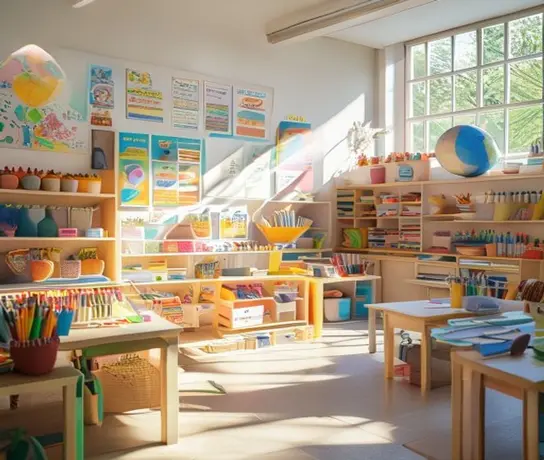

School specialty science programs give K-12 students real instruments, consumables, and lab routines instead of a textbook diagram. The purchases only pay off when they match the standards the class is teaching and the safety rules the district enforces. This guide explains what the category covers, how to align materials with the Next Generation Science Standards, what to buy first at each grade band, and how to fund a lab without waiting for a windfall.
The most common mistake is buying a kit because it looks impressive. A classroom that cannot store chemicals safely, or a teacher who has not been trained on a microscope, gets less value from expensive equipment than from a few durable tools used every week. Match the purchase to the routine first.
What School Specialty Science Covers
The category includes durable equipment, such as microscopes, balances, glassware, and probeware; consumables, such as slides, reagents, seeds, and batteries; kits that bundle a lesson; safety gear, including goggles, aprons, and eyewash stations; and storage that keeps materials organized and locked. Curriculum and professional development are often sold alongside the equipment, and they matter as much as the hardware.
Match Materials to NGSS
The Next Generation Science Standards ask students to do three things at once: learn disciplinary core ideas, use science and engineering practices, and apply crosscutting concepts. A kit that only demonstrates a fact covers the first dimension and skips the other two. Look for materials that require students to plan an investigation, analyze data, and argue from evidence.
A simple filter works. If a product description cannot name the practice students will use, it is probably a demonstration rather than an investigation. The official NGSS site lists the standards by grade and topic, which makes it easy to check a purchase against the actual performance expectation.
What to Buy First, by Grade Band
| Grade band | Start with | Add later | Why |
|---|---|---|---|
| K to 2 | Magnifiers, sorting trays, ramps, seeds, goggles | Simple weather station | Observation and sorting build the habit of evidence |
| 3 to 5 | Thermometers, measuring cups, simple circuits, rock kits | Microscope | Measurement and fair tests fit the standards |
| 6 to 8 | Microscopes, triple-beam balance, pH strips, hot plate | Basic probeware | Quantitative labs need reliable instruments |
| 9 to 12 | Analytical balance, burettes, glassware sets, safety gear | Electrophoresis or probeware | Precision and procedure drive the course |
Buy one good microscope instead of six weak ones. A single instrument that focuses cleanly and a rotation schedule teach more than a cabinet of toys. The same logic applies to balances: a reliable triple-beam balance outlasts three digital scales that drift.
Safety and Storage
Safety is not an add-on. Every lab needs splash goggles that fit, an eyewash within reach, a chemical inventory with dates, and a locked cabinet for anything hazardous. Food and drink stay out of the lab. Teachers should be trained on the equipment they supervise, and students should practice the routine before the first experiment.
Storage deserves a line in the budget. Shelving with a lip, labeled bins, and a separate cabinet for glassware reduce breakage and make inventory quick. A closet that is organized at the start of the year is still organized in May.
Funding a Science Program
Most schools fund science in layers: a district adoption budget, Title I or Title IV funds, a local education foundation, parent-teacher groups, and donor platforms. Corporate STEM grants can cover a specific project, but they usually require a partner and a reporting plan. Start with a single station that fits an existing unit, document the student work, and use that evidence in the next grant application.
If your district is also upgrading classroom technology, coordinate the purchases. Our guide to school specialty science and technology supplies explains where devices and science probeware overlap. General classroom purchasing is covered in teaching supplies every educator needs, and the bundle math in school supply set picks helps when a kit is cheaper than buying components separately.
The Bottom Line
School specialty science pays off when the equipment matches the standard, the teacher is trained, and the storage is safe. Buy a few durable instruments first, add consumables as the routine settles, and write the grant around student evidence rather than a wish list. A modest, well-used lab beats an expensive one that stays in the box.
What does school specialty science include?
It covers the equipment, consumables, kits, safety gear, and storage used for hands-on K-12 science. That ranges from magnifiers and seeds in early grades to microscopes, balances, glassware, and probeware in high school. Curriculum and teacher training are often bundled with the materials.
How much does a basic science lab cost?
A single usable station can cost a few hundred dollars, while a full secondary lab runs into the thousands. Start with one durable instrument and the safety gear required by your district. Fund the rest through adoption budgets, grants, or donations after you document how the first station was used.
Do elementary teachers need a full lab?
No. Elementary science works best with simple, durable materials: magnifiers, sorting trays, ramps, thermometers, and seeds. A full lab is not required to teach observation and fair tests. Add specialized equipment only when a specific unit calls for it and the teacher has been trained.
Anyone weighing school specialty science should compare at least two realistic options before deciding. In practice, school specialty science works best when the basics are handled before anything else. A quick note on school specialty science: the follow-up matters as much as the first decision. If school specialty science feels overwhelming, start with the smallest step that produces a visible result.

What to check before you start
Before committing time or money to school specialty science, it helps to know what a good outcome looks like. Write down the result you actually need, the budget you can live with, and the deadline you are working against. Those three answers rule out most of the options that look attractive but do not fit your situation.
Next, look at the details that are easy to miss: what is included, what costs extra, and what happens when something goes wrong. Ask directly about timelines and follow-up. A clear answer is usually a better sign than a low price, because school specialty science is rarely a one-off purchase of attention.
A simple step-by-step approach
Start with the basics of school specialty science and keep the first step small enough to finish in one sitting. Gather the information you need, compare two or three realistic options, and note the trade-offs in plain language rather than marketing terms.
Then test the decision on a small scale before you scale it up. This is the part most people skip, and it is the reason school specialty science sometimes feels harder than it should. A short trial tells you more than another hour of reading, and it usually surfaces the one constraint that matters in your case.



About the Author