Look at your child and realize they’re growing into someone with dreams, curiosities, and a mind ready to absorb the world. It’s a bittersweet mix of pride and hope. And in that moment, the question often comes: How can I help them truly flourish?
That’s where a deeper understanding of student learning becomes transformative—not just for academic success, but for shaping a confident, capable, future-ready human being.
Today’s kids navigate a world far more complex than even a decade ago. Knowledge is abundant, but focus is scarce. Opportunities are huge, yet competition is global. The promise is breathtaking, but the pressure is real. And in this changing landscape, unlocking exceptional results isn’t just about studying harder. It’s about studying smarter, more intentionally, and with techniques that tap into how the mind naturally thrives.
This guide opens the door to that transformation—practical, compassionate, grounded in real examples, and tailored to what modern, caring parents seek to give their children: not stress-filled achievement, but confident mastery rooted in joy.
Why Understanding Student Learning Matters More Than Ever
When exploring the core of student learning, one truth becomes crystalline: children aren’t machines that memorize; they’re meaning-makers. They thrive when learning feels purposeful, encouraging, and deeply connected to their personal world.
Kids Learn Differently Now—And That’s a Good Thing
Let’s imagine two students to illustrate the shift.
-
Traditional Learner: They study through repetition, note-taking, and memorizing long paragraphs from textbooks.
-
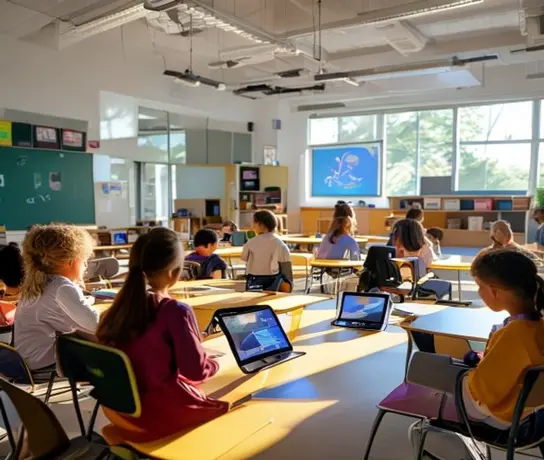
Modern Learner: They retain knowledge through micro-learning, interactive visual tools, storytelling, hands-on experimentation, and exploration.
Neither is “right” or “wrong,” but research consistently shows that modern methods activate more neural pathways, leading to stronger retention. When student learning moves beyond rote techniques, knowledge sticks. Kids feel empowered instead of overwhelmed.
For example, a child who struggles with math formulas may suddenly “get it” through a real-life simulation—like calculating ingredients in a recipe, planning a small building project, or analyzing patterns in their favorite game. What once felt intimidating becomes surprisingly intuitive.
This shift is not just helpful—it’s essential.
The world ahead rewards creativity, adaptability, critical thinking, and emotional resilience. Memorization alone can’t prepare them. But the right learning techniques absolutely can.
The Inspiring Psychology Behind Exceptional Student Learning
Modern research on student learning reveals something beautifully simple: children flourish when learning feels like a discovery, not a demand. And when parents understand the psychology behind this transformation, remarkable things happen.
The Power of Cognitive Curiosity
Kids naturally want to know why.
Why does the sky change colors?
Why do birds migrate?
Why does one number behave differently than another?
When curiosity is activated, the brain releases dopamine—the neurochemical of pleasure and motivation. This makes learning easier, faster, and more enjoyable.
Compare two scenarios:
-
Scenario A: A child is told, “Study chapter four for a test.”
-
Scenario B: A child is asked, “Do you think light travels forever? Want to explore it through a cool experiment?”
Scenario B ignites cognitive curiosity, turning student learning into an adventure rather than a chore.
Emotional Anchoring: Why It Matters
Children remember what touches their emotions.
A science fact tied to a story?
A historical timeline explained through a relatable character?
A moral lesson illustrated by personal experience?
These emotional anchors act like mental glue. They turn abstract information into meaningful narratives kids can recall instantly.
Exceptional student learning always has an emotional pulse.
High-Impact Student Learning Techniques That Drive Real Results
Here are some transformative techniques that help children learn deeply, joyfully, and sustainably—without burnout or boredom.
1. Layered Learning: The Method of Masters
Layered learning works by revisiting concepts with increasing depth.
Example:
A young learner first explores “plants” simply by observing leaves. Later, they study photosynthesis. Eventually, they explore cellular biology. Each layer strengthens the previous one, building competence gradually and naturally.
This technique reduces overwhelm while creating a strong foundation for advanced mastery.
2. Dual-Coding: When Words and Images Unite
When children combine visual and verbal learning, retention skyrockets.
-
Diagrams + definitions
-
Storybooks + illustrations
-
Mind maps + explanations
Dual-coding enhances student learning by engaging both hemispheres of the brain, making abstract information feel more concrete.
3. Interleaving Practice: The Memory Multiplier
Instead of studying one subject for a long block of time, students rotate topics in short cycles.
This method strengthens neural flexibility and reduces fatigue.
Example Comparison:
-
Traditional: 2 straight hours of math
-
Interleaved: 30 mins math → 30 mins English → 30 mins science → 30 mins math
Result: better long-term retention and sharper cognitive processing.
4. Self-Explanation: The “Teaching Method” That Works Wonders
When children explain a concept in their own words, their understanding deepens instantly.
It doesn’t need to be formal.
They can “teach”:
-
a parent
-
a stuffed toy
-
an imaginary classroom
This internalizes knowledge far better than silently memorizing.
5. Micro-Learning: Small Steps, Big Outcomes
Short, focused bursts of learning help kids absorb information without fatigue.
It’s especially powerful for modern attention spans.
Example:
5-minute flashcards after dinner
10-minute vocabulary games before bed
A quick science fact during breakfast
Micro-learning turns everyday moments into learning opportunities.
How Parents Can Strengthen Student Learning at Home
Learning doesn’t end in the classroom—it flourishes at home. Not through pressure, but through nurturing, mindful habits that spark engagement.
1. Create a “Learning Sanctuary”
A quiet corner with:
-
soft lighting
-
minimal clutter
-
comfortable seating
-
accessible materials
This space signals safety, focus, and calm—an ideal environment for strong student learning.
2. Encourage “Process Over Perfection”
Praise effort, not just outcomes.
Instead of saying:
-
“You got it right!”
Try:
-
“I love how you kept trying even when it was tough.”
This builds grit, resilience, and self-belief—key ingredients for exceptional results.
3. Make Learning Playful
Turn challenges into games.
-
Memory races
-
Puzzle-based quizzes
-
Storytelling challenges
-
Educational apps with interactive elements
When play blends with study, motivation rises. Stress drops. Confidence grows.
4. Use Real-Life Analogies
Kids grasp ideas faster when connected to lived experiences.
Fractions become pizza slices.
Physics becomes playground swings.
Economics becomes pocket-money budgeting.
When children see learning everywhere, they stop fearing it—and start loving it.
Inspiring Comparisons: Traditional vs. Modern Student Learning
| Approach | Traditional Learning | Modern Learning |
|---|---|---|
| Motivation | Obligation | Curiosity-driven |
| Style | Memorization | Multi-sensory |
| Environment | Teacher-centered | Student-centered |
| Tools | Textbooks | Visuals, tools, tech |
| Outcome | Temporary recall | Deep, lasting retention |
This comparison reveals a clear truth: modern student learning is not just different—it’s significantly more aligned with how young minds naturally flourish.
Turning Insight Into Transformation: What Happens Next
Exceptional student learning begins with understanding.
It grows with technique.
And it blossoms with consistency.
But the most powerful ingredient is always the same: a caring parent who believes in their child’s potential.
When kids feel supported—emotionally, mentally, and academically—they rise. Their confidence strengthens. Their curiosity expands. Their achievements become shaped not by pressure, but by a genuine love of discovering who they can become.
And the ripple effect?
Lifelong learners.
Critical thinkers.
Creative minds with the courage to explore the unknown.
Your guidance today creates the leaders, innovators, and compassionate humans of tomorrow.
The Call to Action: Empower Your Child’s Best Future Now
Start small.
Observe their learning style.
Blend techniques.
Celebrate progress.
Let them stumble gently, rise proudly, and grow freely.
Because when student learning is nurtured the right way, extraordinary results stop being dreams—they become daily realities.
About the Author