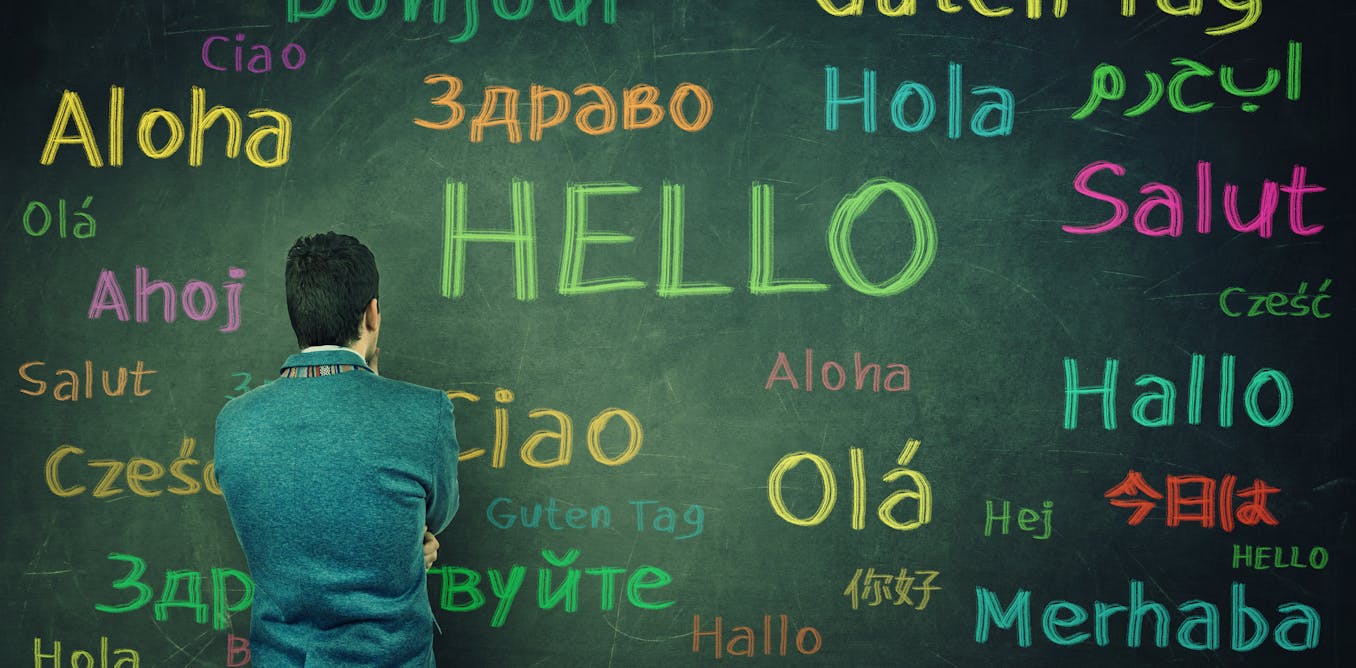
Learning a language still pays in the age of artificial intelligence (AI), even as translation apps improve. Why invest the time and effort to learn another language when technology can do it for you?
There are now translation tools to understand song lyrics, translate websites and to enable automated captions when watching foreign videos and movies. Our phones can instantly translate spoken words.
At the same time, foreign language programmes are closing at New Zealand and Australian universities.
But while technology can translate messages, it misses an important component of human communication – the cultural nuances behind the words.
So, while AI translation might bridge language barriers and promote communication because of its accessibility, it’s important to be clear about the benefits and challenges it presents. Merely relying on technology to translate between languages will ultimately lead to misunderstandings and a less rich human experience.
The rise of translation technology
Translation technology has rapidly grown since its emergence between the 1950s and 1960s. This progress was bolstered by the commercialisation of computer-assisted translation systems in the 1980s.
But recent advances in generative AI have led to significant breakthroughs in translation technologies.
Google Translate has dramatically changed since its launch in 2006. Initially developed as a limited statistical translation machine, it has evolved into a “portable interpreter”.
AI translation is useful in some circumstances. For example, helping teachers communicate with parents who speak a different language, or when travelling.
Translation technology may even play a role in the preservation of Indigenous and minority languages on the verge of disappearing by supporting online collections of literature. Incorporating AI-powered technology in these digital libraries can help users access and understand these texts.
But the new technology also comes with limitations.
In 2019, staff at an Immigration and Customs Enforcement detention centre in the United States used AI translation to process an asylum application. The voice-translation tool was unable to understand an applicant’s regional accent or dialect, leading to the asylum seeker spending six months in detention without being able to meaningfully communicate with anyone.
In 2021, a court in the US determined Google Translate wasn’t reliable enough to ensure someone’s consent. A trooper had used the translation app to ask a Spanish-speaking suspect if he could search her car. Google Translate used the word “registrar” (which translates as “register” but can be used to say “examine”) when, in fact, the word “buscar” (to search) would have been more appropriate.
Brain Benefits of Learning a Language
Learning additional languages also stands out as one of the best ways to improve ourselves, with benefits for brain health, social skills, cultural understanding, empathy and career opportunities.
An analysis of studies from 2012 to 2019 found speaking more than one language can enhance the brain’s flexibility, delay the onset of dementia, and improve cognitive health later in life. The analysis also recommended starting language learning early.
In 2022, the Council of Europe emphasised the significance of plurilingual and intercultural education for fostering democratic culture, noting its cognitive, linguistic and social benefits.
And this year, the council launched the “Language education at the heart of democracy” programme. The goal is to highlight the importance of learning language for a fairer society.
Lost in translation
In Aotearoa New Zealand, English is widely used. Te reo Māori and New Zealand Sign Language are also recognised as official languages. Some 29% of citizens are born overseas. There are more than 150 languages spoken, with at least 24 spoken by more than 10,000 people.
But interest in learning languages has fallen. In 2021, 980 full-time equivalent students studied a language other than Māori or New Zealand Sign Language at one of the country’s eight universities, falling from 1,555 less than a decade earlier.
As a consequence, a number of universities have closed, or announced plans to close, their language programmes.
While AI-powered translation technology has its uses, a great deal can be lost if we rely solely on it to communicate. The nuances of languages, and what they say about different cultures, are difficult to communicate via translation tools.
And the benefits of being bilingual or multilingual – both personally and for the wider community – risk being lost if we don’t support second language learning.
Learning a Language Beside AI Tools: A Method
Learning a language works best as a daily habit, not a weekend project. Fifteen focused minutes beat occasional marathons: shadow native audio, learn phrases instead of single words and speak from day one, even badly, recording short voice notes to track pronunciation progress. Use machine translation as a checker for your own attempts rather than a crutch, and keep a small notebook of mistakes worth repeating correctly. Learners who combine human practice with smart tools keep motivation alive long after novelty fades. Learning a language this way compounds weekly, because each session builds on real conversations rather than drills.
Learning a language and machine translation serve different jobs, as this comparison shows.
| Task | Human learning | Machine translation |
|---|---|---|
| Nuance and humor | Reads context and tone | Often literal |
| Relationships | Builds trust directly | Adds a screen |
| Brain benefits | Memory and focus grow | No effort, no gain |
Start speaking with our practical learning playbook and explore how STEM learning shapes young minds; check official capability notes via Google Translate.
Verdict: learning a language remains worth it because machines translate words while humans build meaning. Study a little daily, use AI as a checker and speak early. Fluency follows consistency, not apps.
Is learning a language still worth it with AI translation?
Yes, for relationships, careers and brain health that apps cannot deliver. Translation handles survival phrases while real conversations need cultural judgment only humans develop.
How much daily practice is enough?
Fifteen focused minutes daily beats weekend marathons. Speak from day one, shadow native audio and review mistakes weekly for steady compounding gains.
Can AI tools speed up the process?
They help as checkers and tutors when you verify everything. When learning a language with AI help, draft with AI, confirm with native sources and keep human conversation at the center.
About the Author