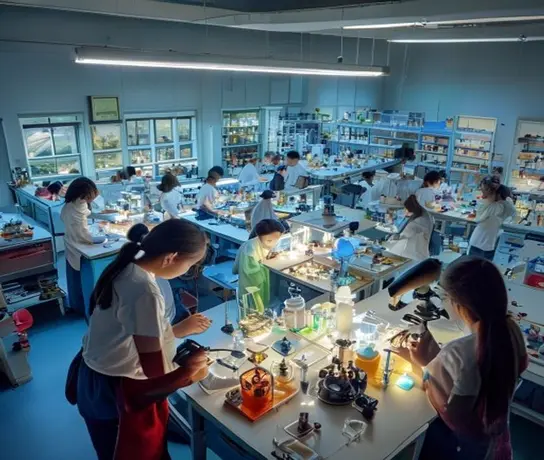
school specialty science
School specialty science encompasses the dedicated resources, advanced curricula, and specialized equipment designed to provide students with a deeper, more hands-on, and inquiry-based understanding of scientific principles beyond standard textbook learning. It is critical for cultivating the next generation of innovators and problem-solvers by moving beyond rote memorization to active exploration.
Implementing effective school specialty science programs is not merely about acquiring equipment. It involves a strategic blend of pedagogical approaches, safety protocols, and continuous teacher professional development. This integrated strategy ensures students develop crucial skills like critical thinking, data analysis, and experimental design.
The Undeniable Value of Robust school specialty science Programs
Investing in specialized science education goes far beyond preparing students for advanced degrees. It builds foundational skills essential for any career path in a rapidly evolving world. Early exposure to complex scientific concepts fosters a lifelong curiosity and a methodical approach to challenges.
According to the National Science Teaching Association (NSTA), authentic science experiences significantly increase student engagement and retention of scientific knowledge. These experiences are the cornerstone of a strong school specialty science curriculum, allowing students to apply theoretical knowledge to real-world scenarios.
Furthermore, strong science programs help address skill gaps in critical STEM fields. A report by the U.S. Department of Education highlights the growing demand for STEM-literate individuals. Specialty science programs are a direct pathway to meeting this national need by nurturing student interest and competence from an early age.
Key Components of Effective school specialty science Initiatives
A truly impactful specialized science program relies on several interconnected elements. Each component must be carefully considered for optimal learning outcomes and safety.
- Curriculum Alignment: Programs must align with national standards such as the Next Generation Science Standards (NGSS), emphasizing core ideas, scientific and engineering practices, and crosscutting concepts.
- Appropriate Equipment: Access to high-quality, durable laboratory equipment, ranging from microscopes and dissection kits to advanced sensors and robotics, is non-negotiable for hands-on learning.
- Teacher Expertise: Educators require specialized training to effectively utilize equipment, facilitate complex experiments, and manage lab safety. Continuous professional development ensures they remain current with best practices.
- Safety Protocols: Strict adherence to lab safety guidelines, including chemical handling, emergency procedures, and proper equipment use, is paramount. This protects both students and staff.
- Experiential Learning Opportunities: Field trips, science fairs, guest speakers, and partnerships with local universities or industries extend learning beyond the classroom.
Choosing the right resources for school specialty science requires careful consideration of instructional goals and budget. Below is a comparison of common science equipment types and their typical applications:
| Equipment Type | Primary Application | Key Benefits for Students |
|---|---|---|
| Microscopes (Compound/Stereo) | Biology, Life Sciences, Material Science | Develop observational skills, understand cellular structures |
| Chemistry Glassware/Kits | Chemistry, Physical Science | Learn chemical reactions, quantitative measurement, lab safety |
| Physics Apparatus (Circuits, Optics) | Physics, Engineering | Explore energy, motion, forces, light, and electricity |
| Earth Science Models/Kits | Geology, Environmental Science | Understand geological processes, weather patterns, ecosystems |
| Robotics/Coding Kits | Computer Science, Engineering, Physics | Develop computational thinking, problem-solving, design skills |
Expert Insight: Debunking the “Specialty Means Expensive” Myth
A common misconception is that “specialty” science education automatically equates to prohibitive costs. While advanced equipment can be an investment, the core of school specialty science is about enriching experiences, not just spending. Creative approaches like utilizing open-source data, collaborating with local community colleges, or repurposing materials can provide significant value.
Consider a hypothetical school district challenged by budget constraints but committed to enhancing its middle school physics program. Instead of immediately purchasing a full suite of high-end force sensors, the district first focuses on teacher training in inquiry-based kinematics using readily available materials like toy cars, ramps, and stopwatches. Teachers then introduce basic data logging with affordable sensors, gradually scaling up. This phased approach demonstrates that thoughtful planning and pedagogical focus can deliver profound educational impact without initial exorbitant costs, proving that resourcefulness often trumps immediate large expenditure in effective school specialty science integration.
The true value lies in the instructional design that transforms standard lessons into engaging, hands-on investigations. It’s about how resources are used to foster curiosity and critical thinking, not just the price tag of the equipment itself.
Prioritizing foundational concepts and ensuring teachers are comfortable with new tools are more impactful than simply acquiring the latest technology. Effective implementation of school specialty science requires a holistic view that balances resources with instructional effectiveness.
Ultimately, a robust school specialty science program empowers students with the knowledge and practical skills necessary to navigate a complex, scientifically driven world. It’s an investment in their future capacity to innovate, analyze, and contribute meaningfully.
About the Author